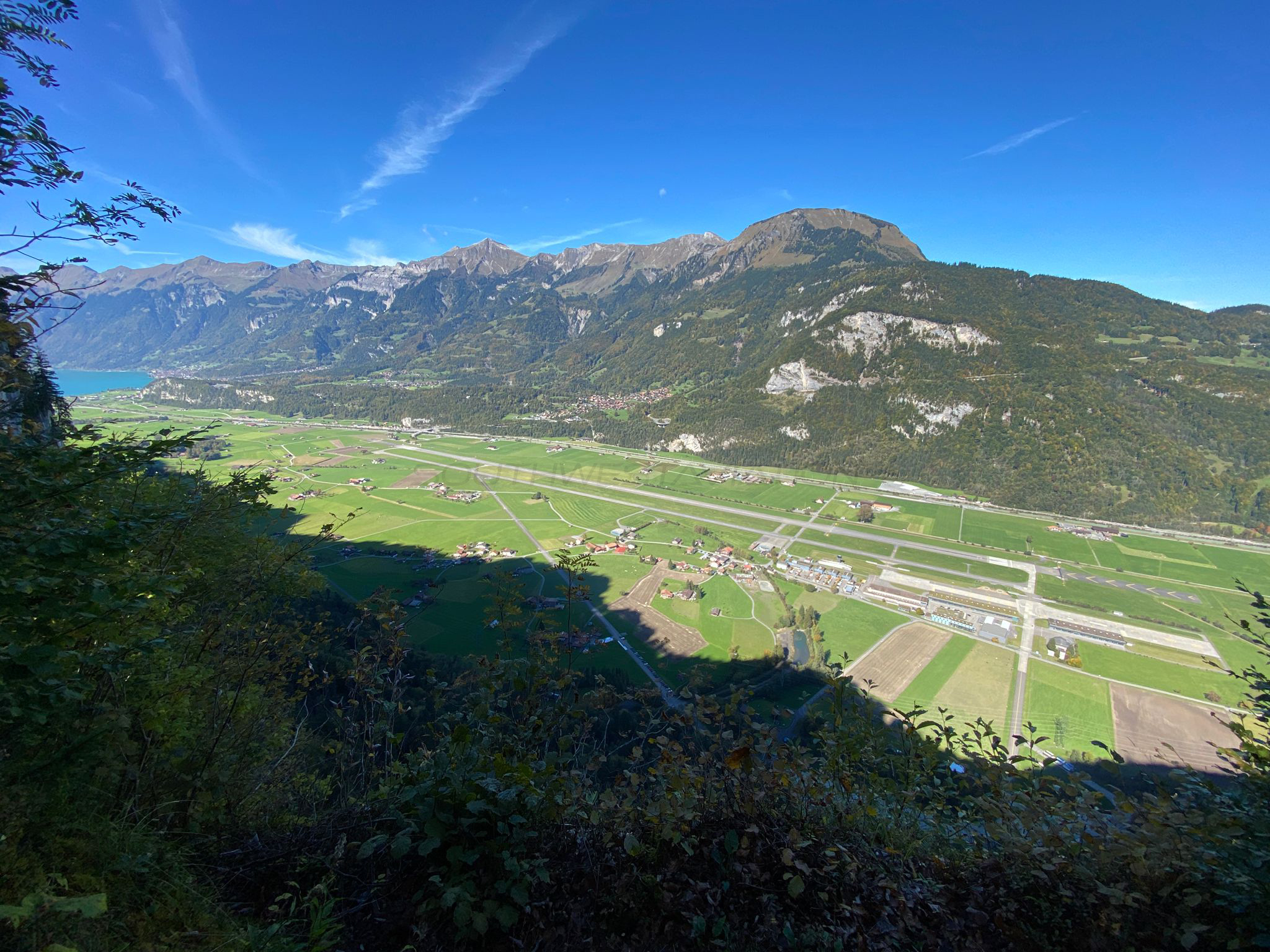
The alpine fighterbase
Geographical description
Meiringen Air Base is located in central Switzerland, nestled deep within the Bernese Oberland near the town of Meiringen. Unlike most European fighter bases, LSMM sits in a narrow alpine valley surrounded by steep mountain ridges, offering a dramatic and highly distinctive operating environment. The airfield lies at the eastern end of Lake Brienz and is framed by towering peaks that define both its visual appeal and its operational challenges.
This unique geography provides natural protection and makes the base particularly suitable for dispersed and hardened operations. Aircraft movements are tightly integrated with the terrain, requiring precise flying and specialized training. The region is characterized by rugged alpine landscapes, dense forests, and limited flat terrain, making Meiringen one of the most visually striking and tactically unique air bases in Europe.


History of the base
Meiringen Air Base was developed during the Second World War as part of Switzerland’s defensive strategy, emphasizing decentralization and survivability. From its early years, the base was designed with hardened infrastructure, including aircraft caverns carved directly into the mountainside—an iconic feature that remains in use today. The base was opened on 1st December 1941, starting it´s long career. In 1946 the base was involved in rescue operations of the C-53 Skytrooper crash on the Gauli Glacier. During this operation, the rescue planes launched from Meiringen, marking the first ever rescue mission on a glacier using planes.
During the Cold War, Meiringen became a key element of Swiss air defense. The base hosted aircraft such as the Hawker Hunter and later the Northrop F-5E Tiger II, both of which played central roles in safeguarding Swiss airspace. The emphasis was always on rapid reaction, dispersal capability, and operations under difficult terrain conditions.
In the late 1990s, the construction work for the modernized caverns started. In 2006 the F/A-18 was introduced to LSMM. Meiringen became one of the primary operating locations for Switzerland’s modern fighter fleet. Today, the base supports frontline Hornet operations and remains an essential pillar of the Swiss Air Force. The units stationed at Meiringen are structured around operational flying squadrons and technical support elements.


The base is closely associated with Fliegerstaffel 11, also known as the “Tigers,” which has become internationally recognized through its participation in NATO Tiger Meets and its distinctive aircraft liveries.


Recent operations
Meiringen plays a central role in Swiss air policing and national airspace security. As part of Switzerland’s Quick Reaction Alert (QRA) capability, armed F/A-18 fighters are partially maintained at readiness. Meiringen is used as a alternative, while the active QRA is based at Payerne Air Base in western Switzerland.
Daily operations include intensive training flights that take full advantage of the alpine environment. Pilots regularly conduct low-level navigation and air combat training within confined valleys, honing skills that are unique to mountainous terrain. Further, the nearby shooting range on the infamous “Axalp” is used on a regular base. These conditions demand exceptional precision and situational awareness, making Meiringen one of the most challenging pilot training environments in Europe. Night operations also form an important part of the training syllabus, further enhancing pilot readiness under all conditions.
Due to problems with the nearby residents Meiringen Air Base is using clear communication to announce exercises or flying sorties. The airforce releases a year-plan every year to communicate operating times.


The future of LSMM
Looking ahead, Meiringen Air Base is set to remain a cornerstone of Swiss air defense. Switzerland’s decision to acquire the F-35A Lightning II marks the next chapter in its fighter aviation history. While infrastructure upgrades will be necessary, Meiringen is expected to continue playing a key operational role alongside other Swiss bases. The acquisition of the F-35A also stirs unrest in the surrounding villages, as many residents fear the Lightning II and anticipate increased noise pollution. As of the time we are writing this article, the Swiss Air Force has announced that there will be exact comparisons between F/A-18 jets and F-35A jets in the near future. We will update this article once the comparisons are finalized.
The combination of advanced fifth-generation aircraft and Meiringen’s unique hardened infrastructure will further enhance Switzerland’s defensive capabilities. The base’s mountain caverns, already a symbol of Cold War resilience, will continue to provide unmatched protection and survivability in a modern context.